You asked before recommending.
The question uncovered the customer's workload. That gives the product comparison a relevant starting point.
Active listeningYour associates practice selling with an AI customer. They speak or type, handle realistic questions and objections, then get specific coaching on what to say better next time.
Explore the sample without an account. Voice and text practice are available in the training app.
For national retail teams, growing chains, and independent stores.
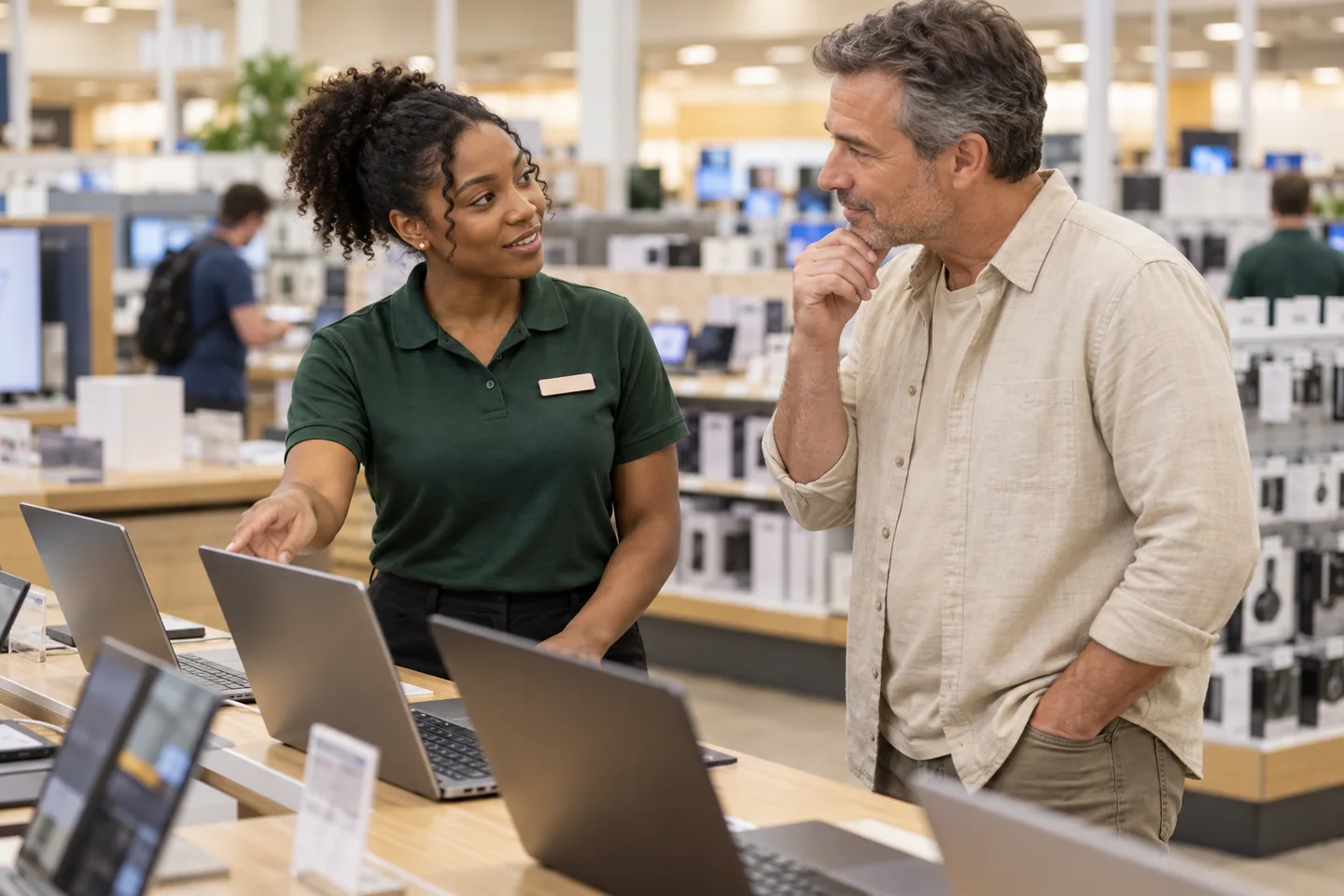 For the moments that matter on the floor.
“I found it for less online. Why should I buy it here?”
Scripted role-play example
Built around retail.
Ready for daily practice.
FloorReps plays the customer so your associate can practice the conversation. The session becomes a transcript, coaching, and a focused next attempt.
Start with a moment from the sales floor: finding the right product, responding to a price objection, or explaining a service accurately.
A specific situation and a clear training goal.Use your microphone or type your responses. The AI responds in character to what you say, with questions, concerns, and objections to work through.
Practice your own words, at your own pace.End the conversation to review the transcript and feedback on the skills in that scenario, including what worked and what needs attention.
Connect feedback to the actual conversation.Choose one improvement, then practice another attempt. Managers can review training activity and results to guide follow-up coaching.
Turn a useful insight into a practiced skill.Try a laptop price comparison or a printer recommendation. Choose a response, read the customer's reaction, and see the coaching.
Interactive scripted examples. No account or microphone needed.A customer conversation becomes something your team can learn from. Explore the experience from the associate's first response to the manager's follow-up.
Speak or type your own responses to an AI customer. Work through the questions, needs, and objections that come up on the sales floor.
Try a sample conversation FloorRepsAssociate practiceIllustrative product view
Practice goalUnderstand the customer's needs before explaining value.
“This laptop is $150 more than the one I saw online. Why should I buy this one?”
“Let's make sure we're comparing the right options. What will you use the laptop for most?”
“Video calls, spreadsheets, and lots of tabs. My current one slows down when they're all open.”
FloorRepsSession reviewIllustrative product view“What will you use the laptop for most?”Associate · Needs discovery
The question uncovered the customer's workload. That gives the product comparison a relevant starting point.
Active listeningConfirm the budget, then connect verified specifications to video calls and multitasking. Explain the tradeoffs in plain language.
Product knowledge FloorRepsManager workspaceIllustrative product viewGive associates a clear situation to rehearse. Review their activity and completed practice results to guide follow-up.
Review the transcript and coaching. Use the associate's actual response as the starting point for feedback.
Illustrative layouts and fictional examples show the approach. Try the scripted demo, or explore the live product with our team.
Give associates room to prepare and managers a useful place to start the next coaching conversation.
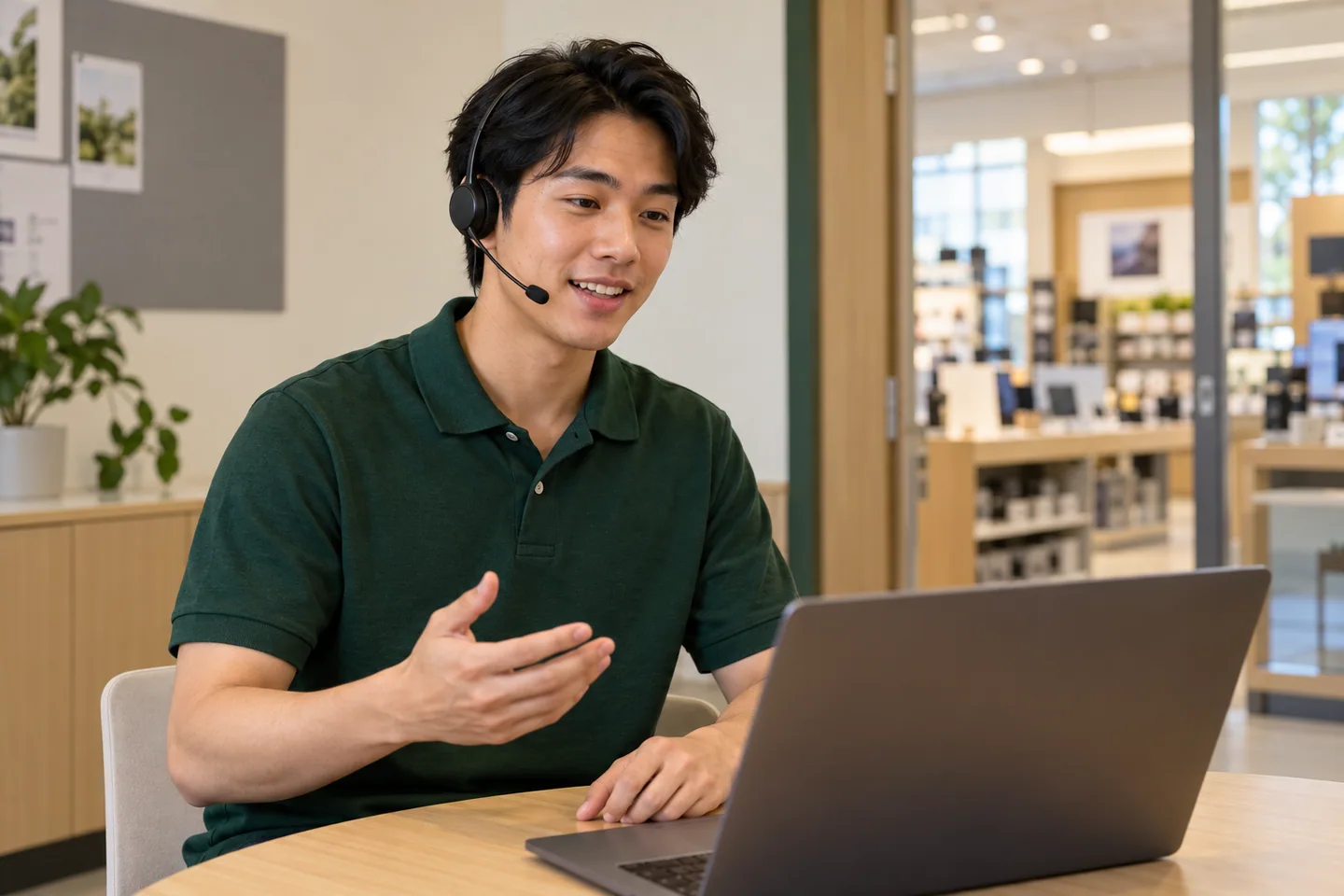
Rehearse a difficult customer question before it comes up in store. Review the coaching, then try a different approach.

Use the practice conversation to discuss what worked, what needs attention, and one useful change for the next attempt.
Bring your selling standards, priority categories, and success criteria. Shape a practice program around the conversations that matter across your stores.
Explore a pilotA strong pilot measures practice, demonstrates skill improvement, and tests the connection to store performance.
Review participation, completed scenarios, and repeat attempts across the pilot group.
Establish a baseline.Compare discovery, accuracy, value explanation, objection handling, and closing skills against an agreed rubric.
Calibrate scores with manager review.Evaluate selected sales or service measures using retailer-provided data and a suitable comparison group.
Measure impact before making claims.Bring one real selling challenge. See how it can become a practice scenario, a coaching rubric, and a focused pilot.
Book your FloorReps demoPilot scope, timing, pricing, and enterprise requirements are agreed during discovery.
Tell us a little about your team. We'll discuss your training priorities, show how the practice works, and agree on a useful next step.